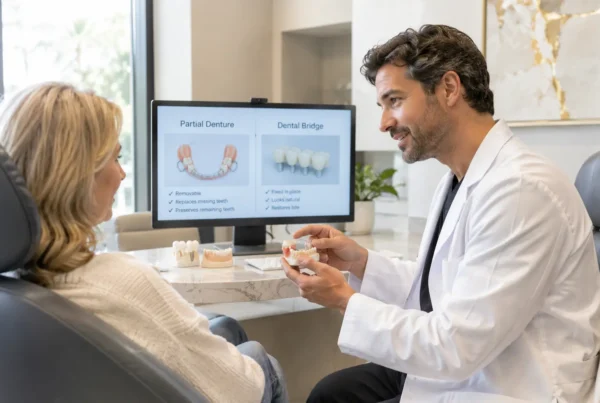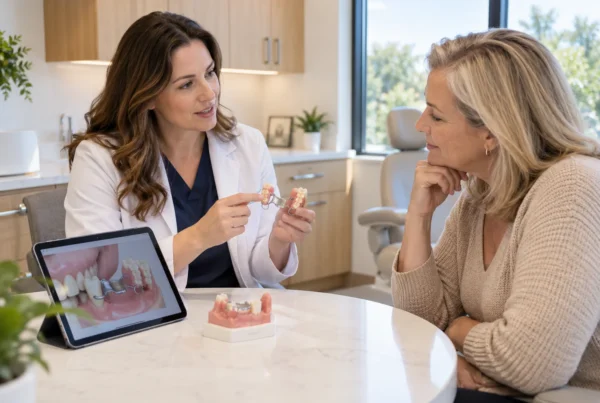


Getting dentures typically takes two to three appointments spread over a few weeks when done with a digital process with Dr. Elaine Wu. Most patients find the digital process far more manageable than they expected. Traditionally, with most dentists, it would take 6-8 steps to make a denture with appointments spread out over months. With Dr. Elaine Wu, the steps are straightforward: a consultation and exam including digital scanning, a try-in and patient approval of fit and shape, and then fabrication and final placement. At ReNEW Dental in Tewksbury, Dr. Elaine Wu, DMD walks every patient through the full process before treatment begins so there are no surprises at any stage.
Dr. Wu earned her dental degree with highest honors from Boston University School of Dental Medicine and completed advanced implant and denture training at Virginia Commonwealth University. She is a full graduate of the Kois Center in Seattle, where science and evidence guide every treatment decision. Patients from Tewksbury Center, Billerica, and across the North-of-Boston area trust her because she takes the time to explain the full process at the first appointment before any treatment is scheduled. The complimentary planning consultation is where that conversation starts.
How Long Does the Denture Process Take?
Traditional dentures typically require six to eight appointments over several months from the first exam to final placement. The timeline shifts based on whether teeth need to be extracted before dentures can be made and how much healing time the gum tissue needs before accurate measurements can be taken. Patients from Wilmington and Andover who come to ReNEW Dental for dentures ask this question first, and the honest answer is that it depends on your starting point.
Immediate dentures are fabricated before extractions and placed the same day so patients are never without teeth. Immediate dentures are a transitional solution. As the gums and bone heal and change shape over the following months, the immediate denture loosens and requires relining or replacement with a permanent denture. Implant-supported dentures may take longer because implant placement and osseointegration add to the overall timeline. Full-arch implant solutions can take three to six months or more from start to finish. Dr. Wu provides a personalized timeline at the consultation based on your specific situation so you know exactly what to plan for.
What Happens at the First Denture Appointment?
After agreeing to denture treatment at the consultation visit, the first appointment at ReNEW Dental is a comprehensive exam and digital scan. Dr. Wu evaluates the condition of your gums, bone structure, and any remaining teeth before making any recommendations. Nothing is scheduled or started until you have a clear picture of your options and what the full process involves.
What Dr. Wu evaluates at the first denture appointment includes:
- Gum health and tissue condition to assess whether the gums are ready for digital scan or need healing time after extractions
- Bone volume and ridge shape, which affect how well the denture will fit and whether implants are a realistic option
- Any remaining teeth and whether they should be kept, used as anchors for a partial denture, or removed before full denture placement
- Your bite relationship and jaw alignment, which determines how the denture is designed to distribute chewing force evenly
- Your goals and preferences: esthetics, chewing function, stability, and whether an implant-supported option is worth discussing
- Insurance benefits and financing options so cost is part of the conversation from the start
Patients from Lowell and North Billerica who have never had dentures before often say this appointment removes most of the anxiety they came in with. Dr. Wu explains the full process, how many appointments to expect, and what each one involves before anything is scheduled. The complimentary consultation is available for anyone who wants a clear picture before committing.
How Are Dentures Measured and Made?
After the consultation, the next step is taking precise scanning of your mouth. These scans form the foundation of the custom denture fabricated in the dental laboratory. The accuracy of these scans directly affects how well the denture fits, how comfortable it feels, and how evenly it distributes chewing force.
Traditional impressions use a tray filled with a putty-like material. The patient bites down or holds still for a minute or two while the material sets and captures the exact shape of the gum tissue and any remaining teeth. At ReNEW Dental, digital scanning replaces traditional impression trays for many patients. A handheld scanner captures the same information without the trays, making the process more comfortable and more precise. The measurements go to the dental laboratory along with a bite registration and shade selection for the denture teeth. At ReNEW Dental, we also take scanning one step further and we do a face scan so that the teeth look right in a patient’s face.
Our in-house laboratory at ReNEW Dental typically takes one to two weeks to fabricate the custom denture. The shade and shape of the teeth are selected at the scanning appointment so the final result looks natural and matches what the patient wants. This is also where the size, position, and midline of the teeth are established. Getting these decisions right at this stage sets up every subsequent appointment for success.
What Is a Denture Try-In and Why Does It Matter?
Before the final denture is processed, many cases include a try-in appointment. At this stage the denture teeth are set in an acrylic base to allow the patient to get a good idea of what the final denture will look and feel like. The patient wears the wax try-in and evaluates how the teeth look, how the bite feels, and whether anything needs adjustment before a final, permanent denture is made. This is the most important quality control step in the entire process. Changes made at the try-in stage are straightforward. Changes made after the final denture is processed are significantly more complex.
The try-in gives the patient a preview of the final result and a real opportunity to provide input on tooth position, midline placement, and how much tooth shows when they speak and smile. Dr. Wu uses this step for complex cases and full-mouth restorations to make sure the final result meets the patient’s expectations before the laboratory completes the work. Not every denture case requires a formal try-in, but when it is indicated it is one of the most valuable appointments in the process.
What Happens When Your Final Dentures Are Placed?
The delivery appointment is when the completed denture is seated for the first time. Dr. Wu checks the fit carefully, evaluates the bite in multiple positions, and makes any immediate adjustments before the patient leaves. Most patients are surprised by how much more comfortable the final denture feels compared to the try-in denture.
What happens at the final denture placement appointment:
- The completed denture is seated and the fit against the gum tissue and ridge is evaluated carefully
- The bite is checked in multiple positions to ensure chewing force distributes evenly and no area is under excessive pressure
- Any pressure spots, tight areas, or fit issues are identified and adjusted chairside before the patient leaves
- Instructions for wearing, cleaning, and caring for the new denture are reviewed in detail before leaving
- A follow-up appointment is scheduled for one to two weeks later to check fit after the gums have had time to respond
- Patients who chose an implant-supported denture have the denture attached to the implant fixtures at this appointment and retention is tested
Patients from Shawsheen Village and Merrimack Meadows consistently say they leave the delivery appointment feeling more confident than they expected. Dr. Wu is clear about what to expect in the days and weeks following placement. No patient leaves ReNEW Dental without understanding what normal adaptation feels like and when to call if something feels wrong.
How Long Does It Take to Get Used to New Dentures?
Most patients adjust to new dentures within four to eight weeks. The first two weeks are the most challenging as the mouth adapts to the new prosthesis. Common early experiences include increased saliva production, minor soreness at pressure points, and some difficulty with certain foods and speech. All of these are normal and resolve as the mouth adjusts to its new appliance.
Follow-up adjustment appointments are a standard part of the denture process at ReNEW Dental. These are scheduled at one to two weeks post-placement and again at one month if needed. The first several adjustments and follow-ups are included in the treatment plan, not add-on charges. Minor adjustments at these appointments relieve pressure spots and improve comfort significantly. Patients from Andover and Billerica who commute for work often ask how quickly they can return to normal eating and speaking, and the honest answer is that it depends on the type of denture and how consistently they wear it during the adjustment period.
Patients with implant-supported dentures typically adjust faster because the denture is stable from day one and does not shift during eating or speaking. Traditional denture wearers experience more of an adaptation period as the gum tissue responds to the new appliance. If soreness, instability, or difficulty chewing persists beyond eight weeks, the denture may need relining or a more detailed adjustment. This is common, straightforward to address, and nothing to delay calling about.
You Already Know More Than You Did an Hour Ago
You came in not knowing what the denture process involved. Now you have a clear picture of every appointment, what happens at each one, and what the adjustment period looks like. That clarity is exactly what you needed to feel ready to take the next step. A denture process planned carefully by a Kois-trained dentist who walks patients through every stage before treatment begins rarely produces surprises. Dr. Elaine Wu and ReNEW Dental bring that standard to every patient they treat in Tewksbury and across the surrounding North-of-Boston communities.
Schedule your complimentary planning consultation at ReNEW Dental and find out exactly what your denture process will look like. No guesswork, no pressure. Your next chapter starts with one honest conversation.
ReNEW Dental
978-451-1500
1201 Main St. Tewksbury, MA 01876
Schedule your consultation today!
Frequently Asked Questions
How Many Appointments Does It Take to Get Dentures?
Denture cases at ReNEW Dental require two to three appointments spread over a few weeks. Traditional dentures at most dentists will take six to eight appointments spread over several months. Cases involving extractions before denture placement extend the timeline because the gum tissue needs time to heal before accurate digital scans can be taken. Immediate dentures reduce the number of toothless days but still require a follow-up permanent denture after healing. Every patient’s timeline is different and Dr. Wu provides a personalized estimate at the consultation based on your specific starting point
Does Getting Dentures Hurt?
The denture fitting process itself is not painful. Digital scanning makes the whole process more comfortable for most patients compared to impressions. If extractions are needed before dentures, they are performed under local anesthesia so the procedure itself is not felt. Mild soreness at pressure points in the days after delivery is normal and is typically resolved with a follow-up adjustment appointment. The ADA notes that well-fitted dentures should not cause ongoing pain, and persistent soreness is a signal to return for an adjustment
Can I Eat Normally with Dentures?
Most denture patients return to a normal chewing within four to eight weeks as they adapt to their new appliance. The early weeks require softer foods and smaller bites while the mouth adjusts. Implant-supported dentures restore chewing function more completely and more quickly than traditional dentures because they are anchored to the bone and do not shift during eating. Research on denture care and maintenance from the Journal of the American Dental Association confirms that chewing function improves progressively during the adaptation period with consistent wear
What Is the Difference Between Immediate and Traditional Dentures?
Immediate dentures are fabricated before extractions and placed the same day, so patients are never without teeth during healing. They serve as a transitional restoration. As the gums and bone remodel over the following months the immediate denture loosens and requires relining or replacement with a permanent denture that fits the healed ridge precisely. Traditional dentures are fabricated after the gums have fully healed and fit more accurately from the start. The NCBI review on denture longevity notes that denture fit and stability are the primary drivers of long-term patient satisfaction