
Most dental crowns last between 10 and 15 years, but well planned and well-maintained crowns frequently last much longer. The lifespan depends on the crown material, where the tooth sits in the mouth, how well the crown was placed, and how consistently you care for it at home and at the dental office. At ReNEW Dental in Tewksbury, Dr. Elaine Wu, DMD plans every crown restoration with long-term stability in mind. The goal is never just to fix the tooth today. It is to protect it for as many years as possible.
Dr. Wu earned her dental degree with highest honors from Boston University School of Dental Medicine, was inducted into the Omicron Kappa Upsilon National Dental Honor Society, and received the Department of General Dentistry Excellence in Implantology Award.
That training shapes how she prepares, places, and maintains every crown. If you have an existing crown and are not sure how it is performing, a complimentary planning consultation with Dr. Wu gives you a clear picture of where things stand.
How Long Do Different Crown Materials Last?
Crown material plays one of the biggest roles in how long a restoration will hold up over time. Each material responds differently to bite pressure, daily wear, and long-term use, which is why dentists do not treat them as interchangeable options. Understanding how these materials perform helps you choose a crown that fits not just your tooth, but how you use it every day.
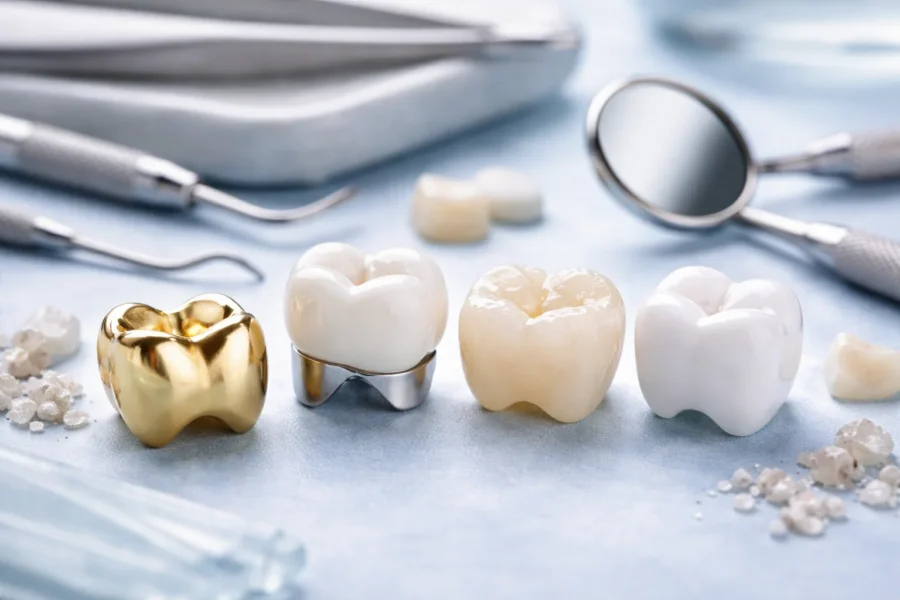
| Crown Material | Typical Lifespan | Key Longevity Factor |
| Porcelain-Fused-to-Metal | 10-15 years | Porcelain layer susceptible to chipping |
| All-Ceramic / All-Porcelain | 10-15 years | Improved significantly with modern ceramics |
| Zirconia | 15+ years | High fracture resistance, biocompatible |
| Metal / Gold Alloy | 20-30 years | Flex resistance, minimal wear on opposing teeth |
Porcelain-fused-to-metal crowns are strong, but the porcelain can chip over time, especially with heavy bite forces. All-ceramic and all-porcelain crowns offer the most natural look and are now much more durable than before. Zirconia provides excellent strength and fracture resistance, while gold and metal alloys last the longest because they absorb pressure without cracking.
How Do Bite Habits and Grinding Affect Crown Lifespan?
The force a crown handles every day matters as much as the material it is made from. A zirconia crown placed on a patient with a normal bite faces very different demands than the same crown on someone who grinds heavily at night. Bruxism is one of the most consistent causes of early crown failure, and many patients do not realize they grind until a dentist identifies the wear patterns during an exam.
Habits and conditions that shorten crown lifespan include:
- Nighttime grinding (bruxism) places repeated stress on crown material during sleep
- Clenching creates sustained pressure on the crown and the underlying tooth structure
- Chewing ice, hard candy, or non-food objects risks chipping or fracturing ceramic crowns
- Using teeth to open packaging or bite fingernails accelerates wear at crown margins
- Untreated bite imbalances distribute chewing force unevenly across restorations
Protecting a crown from bite-related stress is a standard part of the planning process at ReNEW Dental. Dr. Wu’s Kois Center training evaluates occlusion as a whole system, not just one tooth in isolation. When grinding or bite imbalance is identified, an occlusal guard or bite adjustment becomes part of the treatment plan.
How Does Home Care Affect How Long a Crown Lasts?
The crown itself does not decay. The tooth underneath it can. The margin where the crown meets the tooth at the gumline is the most vulnerable area of any crown restoration. Plaque that builds up at that margin leads to decay in the natural tooth structure beneath the crown. By the time that decay becomes symptomatic, it has often progressed far enough to compromise the tooth significantly.
Flossing around the crown every day is more important than most patients realize. Bacteria and food debris collecting at the crown margin accelerate gum recession and create the conditions for decay to begin. Standard brushing twice daily with a non-abrasive toothpaste cleans the crown surface and supports healthy gum tissue around the base of the restoration. These are small habits that have a real impact on how long a crown performs.
Patients with implant-supported crowns follow a slightly different protocol. The implant itself cannot decay, but biofilm control around the implant fixture is critical for long-term success. Peri-implant tissue responds to bacterial buildup the same way natural gum tissue does.
What Are the Signs a Crown Needs to Be Replaced?
Crowns do not announce when they are failing. Most problems develop gradually at the crown margin or underneath the restoration before any symptoms appear. Knowing the early warning signs helps you address issues before a failing crown turns into a more complex problem involving the tooth beneath it.
Signs a crown may need attention include:
- Sensitivity to hot, cold, or sweet foods that was not present before
- Pain or discomfort when biting down or applying pressure to the tooth
- A visible chip, crack, or rough edge on the crown surface
- A visible gap or dark line at the gumline where the crown meets the tooth
- The crown feels loose or shifts slightly when touched
- Swelling, tenderness, or persistent discomfort in the tissue around the tooth
- Your dentist identifies decay at the crown margin on X-rays
None of these signs mean the tooth is lost. Many can be resolved with a new crown placed over still-intact tooth structure. The earlier the issue is identified, the more options remain available. Patients across Merrimack Meadows and Indian Ridge who come in with sensitivity around an older crown are often relieved to find that a straightforward restoration can resolve the problem before it progresses. A routine exam with X-rays at ReNEW Dental gives Dr. Wu a clear view of how a crown is performing, including what is happening at the margin where the naked eye cannot reach.
How Does the Quality of Crown Placement Affect Lifespan?
The fit of a crown at the margin is the single biggest predictor of how long it lasts. A poorly fitting margin allows bacteria and oral fluids to seep under the crown over time. That microleakage creates the conditions for decay to develop in the tooth structure beneath, often without any symptoms until the damage is significant.
Digital 3D scanning eliminates much of the human error involved in traditional crown impressions. Precise digital measurements mean the crown fabricated in the laboratory fits the prepared tooth accurately from day one. A tight marginal seal reduces the risk of leakage and gives the restoration the best possible foundation for long-term performance.
The preparation of the tooth itself also matters. Removing the right amount of tooth structure, enough for the crown to seat properly but no more than necessary, affects both the fit and the long-term strength of the restoration. Bite adjustment after placement ensures the crown distributes chewing force correctly. A crown seated even slightly high concentrates excess pressure on the restoration and accelerates wear.
What Happens at a Crown Maintenance Visit at ReNEW Dental?
At routine exams, Dr. Wu evaluates existing crowns both visually and with X-rays. She checks the margin for signs of leakage or early decay, looks for wear or chipping on the crown surface, and assesses the health of the surrounding gum tissue. Patients with multiple crowns or implant-supported restorations receive a more detailed evaluation of how the bite is distributing force across all restorations. Catching a small problem early almost always means a simpler, less costly solution.
Biofilm air polishing therapy removes biofilm from crown margins and implant fixtures more effectively than standard cleaning instruments. For patients with a history of margin decay or peri-implant sensitivity, biofilm air polishing therapy is a meaningful upgrade in how thoroughly the vulnerable areas around crowns are cleaned. It is a clinical detail that makes a real difference in long-term crown performance.
The principle behind every maintenance visit at ReNEW Dental is the same one that guides treatment planning: address small issues before they become large ones.
The Investment You Made Deserves to Last
You made a serious decision when you chose to restore that tooth properly. The crown was not the easy choice, but it was the right one. With the right care and the right provider maintaining it over time, a well-placed crown gives you a tooth that functions normally, holds up under daily use, and stays out of your thoughts for years. That is the outcome Dr. Elaine Wu and ReNEW Dental work toward with every restoration placed in Tewksbury.
Schedule your complimentary planning consultation with Dr. Wu and find out exactly how your crown is performing, or what it will take to place one that lasts. No pressure, no obligation. Your next chapter starts with one conversation.
ReNEW Dental
978-451-1500
1201 Main St. Tewksbury, MA 01876
Schedule your consultation today!
Frequently Asked Questions
Can a Dental Crown Last 20 Years or More?
Many patients want to know whether a crown is a one-time investment or something they will need to redo within a decade. Crown material, placement quality, bite habits, and home care all determine where a crown lands on the longevity spectrum. Zirconia crowns regularly exceed 15 years when placed precisely and maintained consistently. Gold and high-noble metal alloy crowns have a documented track record of 25 to 30 years in patients with good oral hygiene and regular dental visits. Most ceramic crowns fall in the 10 to 15-year range. Every patient is different, and treatment outcomes are based on individual oral health needs, so asking your dentist for an honest lifespan estimate based on your specific tooth and habits gives you the most useful answer.
What Causes a Dental Crown to Fail Early?
Patients who have experienced a crown failure want to understand why it happened and whether it was preventable. Poor marginal fit is the most common structural cause. A crown that does not seal tightly at the gumline allows bacteria and fluids to reach the tooth underneath, leading to decay that undermines the restoration from below. Untreated bruxism accelerates wear and fracture risk significantly, particularly in ceramic crowns. Chewing hard objects, trauma to the tooth, and skipping routine maintenance visits all contribute to shortened crown lifespan. Many early failures are preventable with proper diagnosis before placement and consistent care afterward.
Does a Crowned Tooth Still Need to Be Brushed and Flossed?
Some patients assume the crown fully protects the tooth beneath it. The crown covers the visible portion of the tooth but does not seal off the root or the margin where the crown meets the gum. Plaque accumulating at that margin leads to decay in the underlying tooth structure and gum disease around the root over time. Flossing around the crown every day removes the bacteria that build up in the one area most people miss. Brushing twice daily with a non-abrasive toothpaste keeps the crown surface clean and supports healthy gum tissue at the base of the restoration. These habits directly affect how long the crown performs.
What Should I Do If My Dental Crown Falls Off?
A crown that comes off is not a dental emergency, but it needs prompt attention. The prepared tooth underneath is sensitive, exposed to temperature, and vulnerable to chipping without its protective covering. Do not attempt to recement the crown yourself. Keep the crown in a safe place and call your dental office as soon as possible. Avoid chewing on that side of the mouth until the crown is re-evaluated. In many cases, if the tooth structure beneath is intact and the crown is undamaged, it can be recemented at the same appointment. If decay or fracture is present, a new crown may be needed.