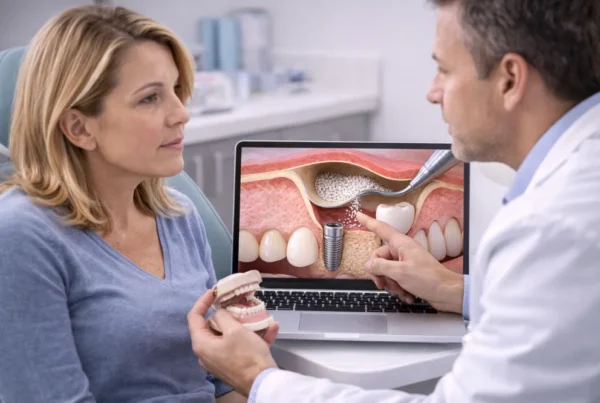


Sinus lift bone grafting is performed when the upper back jaw does not have enough vertical bone height to support a dental implant securely. In Tewksbury, MA, many patients are surprised to learn that bone height matters just as much as bone strength when planning implant treatment. The purpose of sinus lift bone grafting is to create the space and structure necessary for a stable, long lasting implant.
At ReNEW Dental, Dr. Elaine Wu, DMD approaches sinus lift bone grafting with detailed digital planning and clear explanation. Patients often feel uncertain when they hear they lack sufficient bone for implants. Dr. Wu’s role is to explain why the bone has changed, how grafting restores height, and how this step supports long term implant success.
Why The Upper Jaw Loses Bone Height
When a tooth is missing in the upper back jaw, the surrounding bone gradually begins to shrink. At the same time, the sinus cavity above the molars can expand downward into the space where bone once existed. This combination reduces the available vertical bone height needed to anchor an implant securely.
This process is natural and happens even with good oral hygiene. The jawbone depends on stimulation from tooth roots to maintain its shape and density. Without that stimulation, the body slowly remodels the area.
As bone height decreases, placing an implant without preparation may compromise stability. That is why sinus lift bone grafting is sometimes necessary before implant placement. The procedure rebuilds what time or tooth loss has changed.
What Sinus Lift Bone Grafting Actually Does
Sinus lift bone grafting creates additional vertical space between the jawbone and the sinus cavity. The sinus membrane is gently lifted upward to make room for graft material. That material supports new bone growth in the area where height is limited.
Over several months, the graft integrates with your natural bone. The body gradually replaces the graft with living bone tissue. Once healing is complete, there is enough vertical bone height to safely place an implant.
This step is not about adding something unnecessary. It is about building the foundation that allows the final implant to function comfortably and predictably. Without adequate height, even a well placed implant may not succeed.
Materials Used In Sinus Lift Bone Grafting
Patients often wonder what type of material is used during sinus lift bone grafting. The graft material serves as a scaffold that encourages the body to produce new bone. Different options are available depending on the case and clinical preference.
Common graft materials include:
- Autograft, which uses a small amount of your own bone.
- Allograft, which uses processed donor bone material.
- Xenograft, which uses purified bone from another species.
- Synthetic graft materials designed to support bone regeneration.
- A combination of materials to optimize healing and stability.
Each material is selected based on safety, predictability, and long term success. The goal is always the same, encourage the body to generate strong, stable bone. Your dentist explains which material is appropriate and why it fits your situation.
Sinus Lift Compared To Other Bone Grafting Procedures
Bone grafting can occur in several areas of the mouth depending on the structural need. A sinus lift is specifically designed to increase vertical bone height in the upper back jaw. Other grafting procedures address width or preservation rather than height.
| Procedure | Primary Goal | Location | When It Is Recommended |
| Sinus lift bone graft | Increase vertical bone height | Upper back jaw | When sinus limits implant placement |
| Ridge augmentation | Increase bone width | Any jaw area | When jawbone is too narrow |
| Socket preservation | Maintain bone after extraction | Tooth socket | Immediately after removal |
Each procedure solves a different biological problem. A sinus lift is unique because it works against sinus expansion that reduces implant space. The correct approach depends on imaging and structural evaluation.
When Sinus Lift Bone Grafting Is Recommended
Sinus lift bone grafting is recommended when imaging shows insufficient bone height beneath the sinus cavity. This is common in patients who have been missing upper molars for many years. It can also occur naturally due to anatomical differences.
Common reasons include:
- Long term tooth loss in the upper back jaw.
- Sinus expansion reducing vertical bone height.
- Previous implant failure related to bone deficiency.
- Naturally thin bone structure in the posterior maxilla.
- Planning for multiple implants in the upper jaw.
These factors do not prevent implant treatment. They simply indicate that preparation is needed before implants are placed. Addressing the deficiency first increases predictability and long term success.
Recovery And Healing After Sinus Lift Bone Grafting
Recovery from sinus lift bone grafting is typically manageable when instructions are followed carefully. Mild swelling and sinus pressure are common during the first few days. Most patients resume normal activities shortly after the procedure.
Because the sinus cavity is involved, certain precautions are important. Avoiding pressure changes helps protect the healing graft. Following instructions supports steady integration of the new bone.
Healing generally takes several months before an implant can be placed. This timeline allows the graft material to convert into stable bone. Rushing this stage may compromise implant success.
Building The Foundation For Long Term Implant Success
Dental implants rely on strong, stable bone to function properly. When vertical bone height is limited, sinus lift bone grafting creates the structural support implants need. This preparation step turns uncertainty into opportunity.
At ReNEW Dental, Dr. Elaine Wu, DMD guides patients through that process with clarity and precision. She explains what imaging shows, what the graft accomplishes, and how each stage supports long term comfort. If you are considering implants and have been told you lack bone height, call 978-451-1500 to schedule a consultation and explore a thoughtful plan forward.
Frequently Asked Questions
Why does the upper jaw lose bone height faster than other areas?
The upper back jaw loses height more quickly because bone shrinks after tooth loss while the sinus cavity can expand downward at the same time. This dual process reduces available vertical space for implants. The combination makes sinus lift bone grafting more common in this region.
Is sinus lift bone grafting safe?
Sinus lift bone grafting is considered a predictable and well established procedure when planned properly. Digital imaging and careful technique reduce risks and improve outcomes. Following post operative instructions supports safe healing.
What happens to the bone graft over time?
The graft material acts as a scaffold that encourages the body to form new bone. Over several months, the body gradually replaces the graft with living bone tissue. The result is stable bone height that can support an implant.
Can I skip bone grafting and still get an implant?
If there is insufficient bone height, placing an implant without grafting may compromise stability. The implant could fail or loosen over time due to lack of support. Sinus lift bone grafting creates the foundation necessary for long term implant success.