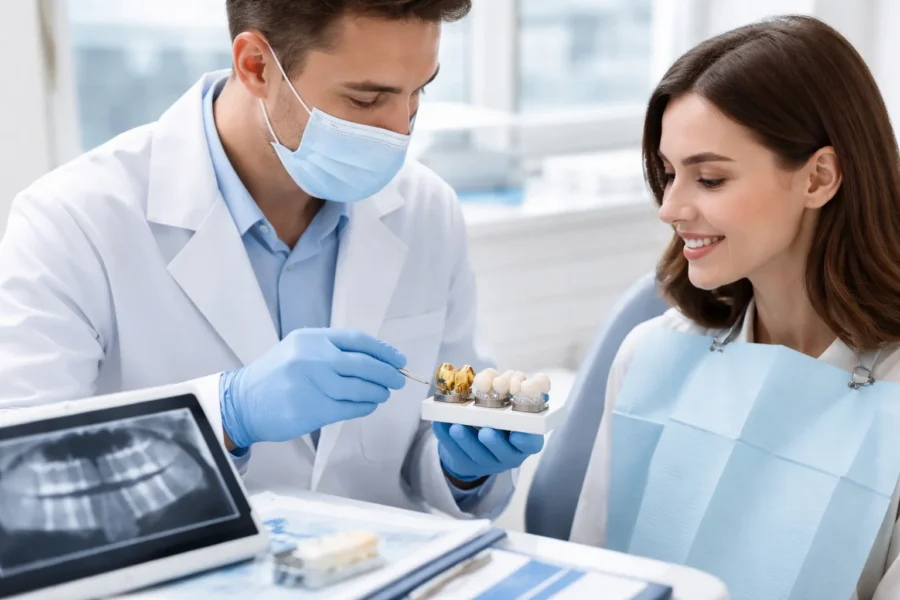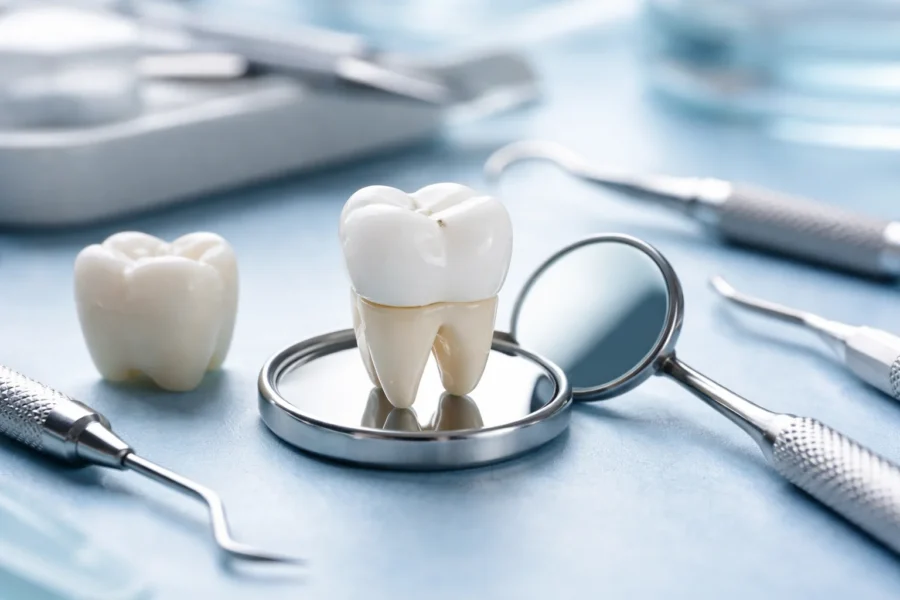

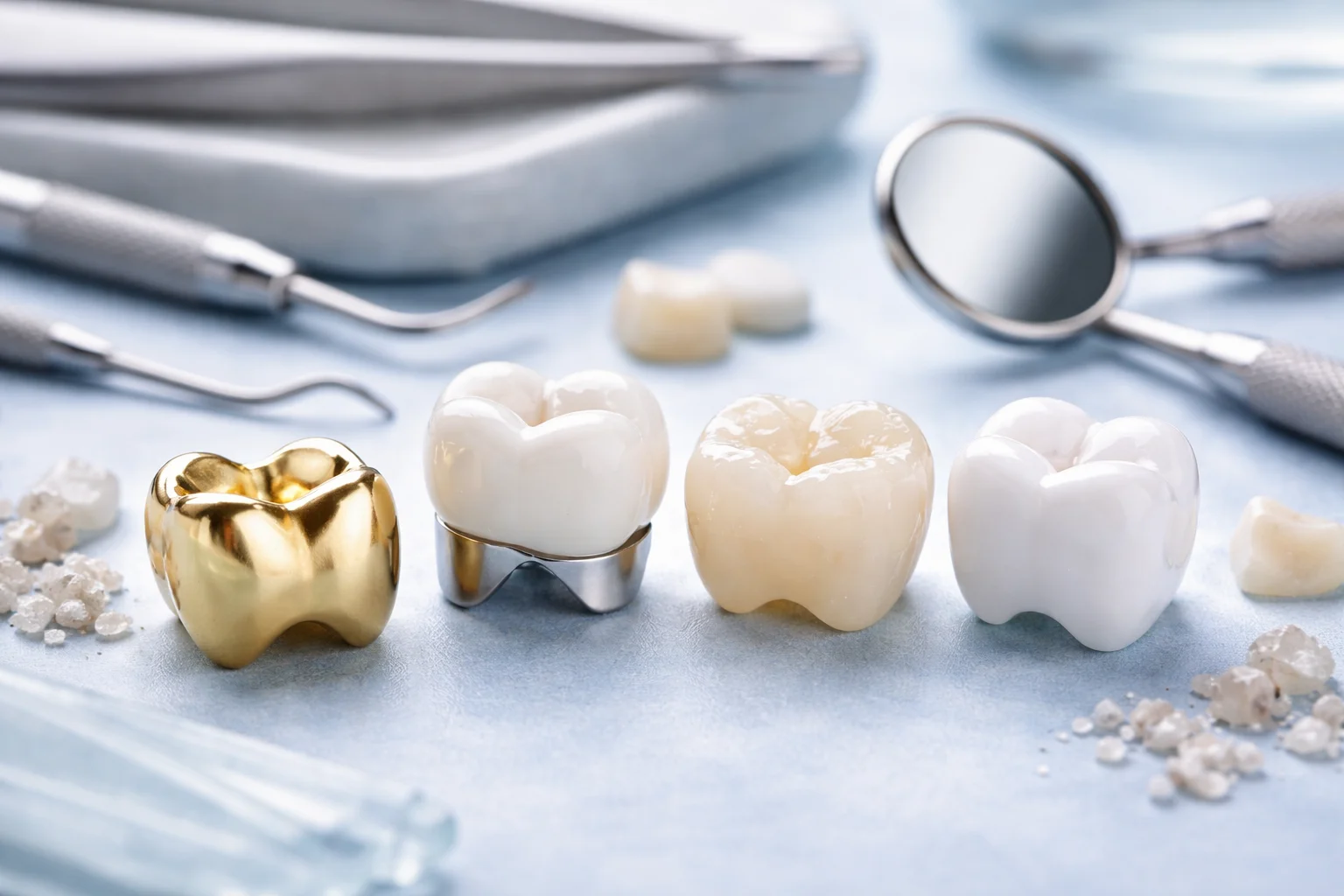
There are four main types of dental crowns: porcelain-fused-to-metal, all-ceramic, zirconia, and metal alloy. Each material handles bite pressure, appearance, and longevity differently. The right choice depends on where the tooth sits in your mouth, how much force it handles daily, and what matters most to you in terms of function and appearance. At ReNEW Dental in Tewksbury, Dr. Elaine Wu, DMD uses digital 3D scanning and her Kois Center training to match each patient to the right crown material based on their bite, jaw forces, and esthetic goals.
Dr. Wu earned her dental degree with highest honors from Boston University School of Dental Medicine, was inducted into the Omicron Kappa Upsilon National Dental Honor Society and received the Department of General Dentistry Excellence in Implantology Award. That foundation shapes every crown recommendation she makes. If you are not sure which crown material is right for your tooth, a complimentary planning consultation is the right place to start.
What Are Porcelain-Fused-to-Metal Crowns?
Porcelain-fused-to-metal crowns, often called PFM crowns, have been used in dentistry for decades. They combine a metal substructure with a porcelain outer layer, giving the crown structural strength from the metal base and a tooth-colored appearance from the porcelain surface. This combination made PFM crowns one of the most widely placed restorations in restorative dentistry for many years.
PFM crowns work well for back teeth that handle heavier occlusal load. The metal core provides reliable support under chewing pressure, while the porcelain layer blends with surrounding teeth well enough for most patients. They are often a cost-effective option for patients who need a durable back tooth restoration and are not prioritizing a purely natural appearance.
One known limitation is the gingival margin line. As gum tissue recedes over time, a thin dark or gray line can become visible at the base of the crown where the metal substructure meets the tooth. For front teeth in the visible smile zone, this can become a cosmetic concern.
What Are All-Ceramic and All-Porcelain Crowns?
All-ceramic and all-porcelain crowns contain no metal. The entire restoration is made from dental ceramic, which gives these crowns the most natural appearance of any crown type available. Light passes through the material similarly to how it passes through natural enamel, creating a translucency that metal-containing crowns cannot replicate.
These crowns are the preferred choice for front teeth and any tooth in the visible smile zone. They are also the right option for patients with metal sensitivities or allergies, since no metal contacts the tooth or surrounding tissue. For patients working with Dr. Wu on a smile makeover or full-mouth cosmetic restoration, all-ceramic crowns are often the foundation of the esthetic plan. The result looks like a natural tooth because the material behaves like one.
What Are Zirconia Crowns?
Zirconia is a ceramic material with significantly higher strength than traditional porcelain. It handles the bite forces of back molars while still producing a natural-looking result, which is why it has become one of the most widely used crown materials in modern restorative dentistry.
There are two main types. Monolithic zirconia is milled from a single block of the material. It is extremely strong and works well for back teeth where maximum durability is the priority. Layered zirconia uses a zirconia core with porcelain layered on top to add translucency and a more lifelike appearance. This version works well for front teeth where both strength and esthetics matter.
Zirconia is also highly biocompatible, meaning the body tolerates it well with minimal risk of inflammation or allergic response. For implant-supported crowns, zirconia is frequently the material of choice because of this combination of strength, esthetics, and tissue compatibility. Dr. Wu’s digital 3D scanning workflow produces the precise measurements that make zirconia crowns fit accurately and function predictably from day one. Patients in Merrimack Meadows and across North Tewksbury who have implants placed often receive zirconia crowns for this reason.
When Are Metal or Gold Crowns Still Used?
Gold and high-noble metal alloy crowns have the longest track record in dentistry. Some well-placed gold crowns have remained functional for 30 years or more. That durability comes from the material’s ability to flex slightly under bite force without fracturing, which makes it the most wear-resistant option available.
Metal crowns require less tooth structure removal during preparation vs other materials like all-ceramic and all-porcelain crowns. That is a meaningful clinical advantage, since preserving natural tooth structure is always the goal. For patients with heavy bruxism who grind their teeth at night, metal crowns hold up under repeated stress better than ceramic options. A ceramic crown placed on a back molar in a heavy grinder faces real fracture risk over time. Metal does not. For the right clinical situation, recommending a gold crown is not outdated. It is science-driven dentistry applied honestly.
How Do the Four Crown Types Compare?
Dentists do not choose crown materials randomly. Each type is designed to solve a different problem based on strength, location in the mouth, and how visible the tooth is when you smile. Looking at them side by side makes it easier to understand why one option may be recommended over another.
| Crown Type | Used For | Esthetic Rating | Strength | Avg. Longevity | Metal-Free |
| Porcelain-Fused-to-Metal | Back teeth, value-focused patients | Fair | High | 10-15 years | No |
| All-Ceramic / All-Porcelain | Front teeth, metal-sensitive patients | Highest | Moderate | 10-15 years | Yes |
| Zirconia | Front and back teeth, implant crowns | Very High | Very High | 15+ years | Yes |
| Metal / Gold Alloy | Molars, heavy grinders | Low | Highest | 20-30 years | No |
The right material is never simply the newest or the most esthetic. It is the one that matches the clinical reality of your tooth with your personal priorities.
How Does Your Dentist Choose the Right Crown Material?
Crown material selection is a clinical decision, not a personal preference exercise. The material that works best for your tooth depends on where it sits in your mouth, how much force it handles, and what your oral health history looks like. Dr. Wu evaluates each of these factors before making a recommendation, which is why the complimentary planning consultation matters so much before any treatment begins.
The factors that guide crown material selection at ReNEW Dental include:
- Location of the tooth: front, premolar, or back molar
- Amount of bite force and chewing pressure the tooth handles daily
- Whether the crown will sit on a natural tooth or an implant
- Esthetic priority and visibility of the tooth in the smile zone
- History of grinding, clenching, or bruxism
- Amount of remaining natural tooth structure after decay removal
- Known sensitivities or allergies to metals
No single material wins across every situation. A patient in Shawsheen Village who needs a crown on a back molar and grinds at night gets a different recommendation than a patient replacing a front tooth after an injury. The clinical picture drives the decision.
What to Expect When Getting a Crown
Most crowns at ReNEW Dental are completed in two visits. At the first appointment, Dr. Wu removes any decay and shapes the tooth so the crown seats with a precise fit. A digital scan captures the exact dimensions of the prepared tooth and sends that information to the dental laboratory. No traditional impression trays are needed. The digital process is more accurate, more comfortable, and produces a crown that fits the tooth correctly from the start.
A temporary crown protects the prepared tooth while the permanent restoration is fabricated. At the second appointment, the temporary crown is removed and the permanent crown is seated, adjusted for your bite, and cemented securely. The entire process is straightforward and well-tolerated by most patients, including those who have avoided the dentist for years.
With proper brushing, flossing, and routine hygiene visits, a well-placed crown commonly protects a tooth for ten to fifteen years or longer. Zirconia and metal crowns often exceed that range. Patients across Tewksbury Village and the surrounding communities who invest in the right crown material rarely need to revisit that same tooth again. The goal is one well-planned restoration that lasts, not a series of repairs.
Your Next Step Starts with a Conversation
You came in with a tooth that needed more than a filling could offer. Now you understand your options and the thinking behind each one. The right crown material gives you a tooth that functions well, looks natural in your smile, and stays stable for years without requiring your attention. That is the outcome Dr. Elaine Wu and the team at ReNEW Dental work toward with every restoration.
Schedule your complimentary planning consultation with Dr. Wu and find out exactly which crown material fits your tooth, your bite, and your goals. No pressure, no obligation. Your next chapter starts with one conversation.
ReNEW Dental
978-451-1500
1201 Main St. Tewksbury, MA 01876
Schedule your consultation today!
Frequently Asked Questions
What Is the Strongest Type of Dental Crown?
Patients with damaged back teeth want a restoration that holds up under real daily use, not just in a clinical setting. The most important factor is matching crown strength to the forces that tooth actually handles. Zirconia crowns offer the best combination of strength and natural appearance for most patients, making them the most versatile high-strength option available today. For patients with severe bruxism or very heavy bite forces, metal and gold alloy crowns remain the most durable choice because of their resistance to fracture under repeated stress. Treatment decisions should always be made with a licensed dentist after a thorough examination of your individual bite and oral health.
Are Porcelain Crowns as Strong as Metal Crowns?
Many patients associate porcelain with fragility, which was a fair concern with older ceramic materials. Modern all-ceramic and zirconia crowns are significantly stronger than the porcelain used in dentistry a generation ago. Zirconia in particular handles the forces of back teeth well in most clinical situations. That said, metal crowns still outperform ceramics in raw fracture resistance, particularly for patients who grind heavily at night. The right answer depends on your tooth’s location and the forces it faces every day, which is why a clinical evaluation matters more than any general comparison.
How Long Do Dental Crowns Last?
Crown longevity depends on the material, the forces the tooth handles, your home care routine, and how consistently you attend hygiene visits. Porcelain-fused-to-metal and all-ceramic crowns commonly last ten to fifteen years with proper care. Zirconia crowns frequently exceed that range. Metal and gold alloy crowns have the longest documented track record, with well-maintained restorations sometimes lasting twenty to thirty years. Every patient’s situation is different and treatment outcomes are based on individual oral health needs, so asking your dentist for an honest longevity estimate based on your specific tooth and habits gives you the most useful answer.
Does Getting a Crown Hurt?
Pain fear is one of the main reasons patients delay restorative treatment, and it is worth addressing directly. The crown preparation appointment is completed under local anesthesia, so the procedure itself is not painful. Some sensitivity around the prepared tooth in the days following the appointment is normal and typically short-lived. Once the permanent crown is placed and cemented, it does not cause pain. Patients who have avoided treatment for years often say the experience was far easier than they expected. Every patient is different, and Dr. Wu takes time before any procedure to make sure you are fully comfortable and informed.