
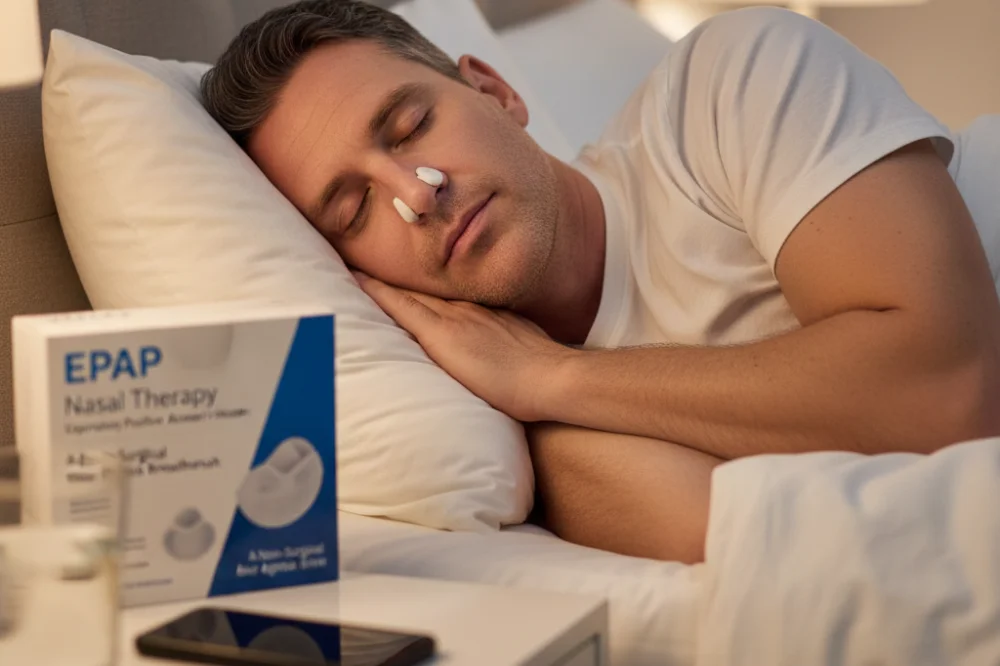
EPAP therapy gives you a simpler way to treat sleep apnea without CPAP machine hassle. These small devices fit over your nostrils and work without electricity, perfect for travel and everyday use. They’re especially good for people with mild to moderate sleep apnea who struggle with bulky CPAP equipment.
Dr. Elaine Wu at ReNEW Dental, trained at Boston University and the Kois Center, specializes in oral appliance therapy for sleep apnea. While she doesn’t provide EPAP treatment, she helps patients understand all available options and determines which approach best fits their needs. This guide provides information about how EPAP works, why people stick with it, who makes the best candidates, and how it compares to other treatments like oral appliances.
Understanding How EPAP Works
EPAP stands for Expiratory Positive Airway Pressure. It works totally different from CPAP machines. CPAP blows air into your airway all night. EPAP only works when you breathe out, creating pressure that stops throat collapse during your next breath in.
The EPAP device fits over your nostrils like tiny valves. Air flows normally when you breathe in. When you breathe out, valves create resistance. This back-pressure keeps airway muscles toned and prevents the collapse causing sleep apnea.
Many people find EPAP feels more natural than constant forced air. You breathe in normally without air blown into your nose and mouth. This reduces the claustrophobic feeling many experience with CPAP. While EPAP doesn’t work for everyone, it can be effective for people with mild to moderate obstructive sleep apnea who struggle with CPAP compliance.

Why EPAP Improves Treatment Compliance
The biggest advantage of EPAP is that people actually use it every night. Consistent use matters way more than having the most powerful treatment you won’t stick with.
EPAP can eliminate most problems that make people quit CPAP therapy. No complex setup routine. No equipment to clean every day. No worrying about power outages when traveling. Comfort levels run higher because there’s no mask on your face.
Portability makes EPAP perfect for frequent travelers. The devices fit in your pocket. You don’t need to pack bulky equipment or hunt for electrical outlets in hotels. Privacy concerns disappear because devices are silent and invisible to sleeping partners.
Social situations become less awkward too. You can use EPAP during overnight visits without explaining complex medical equipment. Nobody gets disturbed by machine sounds. Higher compliance rates often lead to better overall treatment outcomes.
Key Advantages That Make EPAP Easy to Use
EPAP offers practical benefits traditional CPAP can’t match. These advantages explain why compliance rates stay high.
- Daily convenience features
- No electricity. Silent operation
- Fits in pockets. Simple rinsing
- No mask marks. Works immediately
- Minimal maintenance
Privacy concerns disappear because EPAP devices are silent and invisible to sleeping partners. Social situations become less awkward. You can use EPAP during overnight visits without explaining complex medical equipment.
Who Makes Good Candidates for EPAP
EPAP works best for specific sleep apnea patients. Knowing if you’re a good candidate helps decide if this treatment makes sense.
Mild to moderate obstructive sleep apnea patients see best results. If your AHI is between 5 and 30, EPAP might provide good treatment while being more convenient than CPAP.
Good nasal breathing is essential because EPAP works through your nostrils. Chronic congestion, deviated septum, or breathing blockages mean EPAP probably won’t work.
CPAP intolerance strongly suggests EPAP might be a good alternative. If you tried CPAP but couldn’t handle the mask or air pressure, EPAP offers a different approach.
Active lifestyles make EPAP appealing. Frequent travelers and younger patients appreciate the flexibility and discrete nature of these devices.
Matching EPAP to Your Sleep Apnea Type
Different sleep apnea patterns respond differently to EPAP. This table shows how well EPAP works for various patient profiles.
| Patient Profile | EPAP Suitability | Key Considerations |
| Mild OSA (AHI 5-15) | Excellent | Often provides adequate treatment |
| Moderate OSA (AHI 15-30) | Good | May need combination therapies |
| Severe OSA (AHI 30+) | Limited | Usually requires aggressive treatment |
| Good nasal breathing | Essential | Won’t work with blocked passages |
| Frequent travelers | Excellent | Portability is major advantage |
| CPAP intolerant | Good | Offers different approach |
Sleep apnea specialists do thorough evaluations to determine if your sleep apnea severity, nasal anatomy, and lifestyle make you a good EPAP candidate.
Integrating EPAP into Your Treatment Plan
EPAP can work alone or as part of a bigger treatment plan. Standalone treatment works well for people with mild sleep apnea and good nasal breathing. Healthcare providers monitor patients carefully to ensure adequate symptom relief.
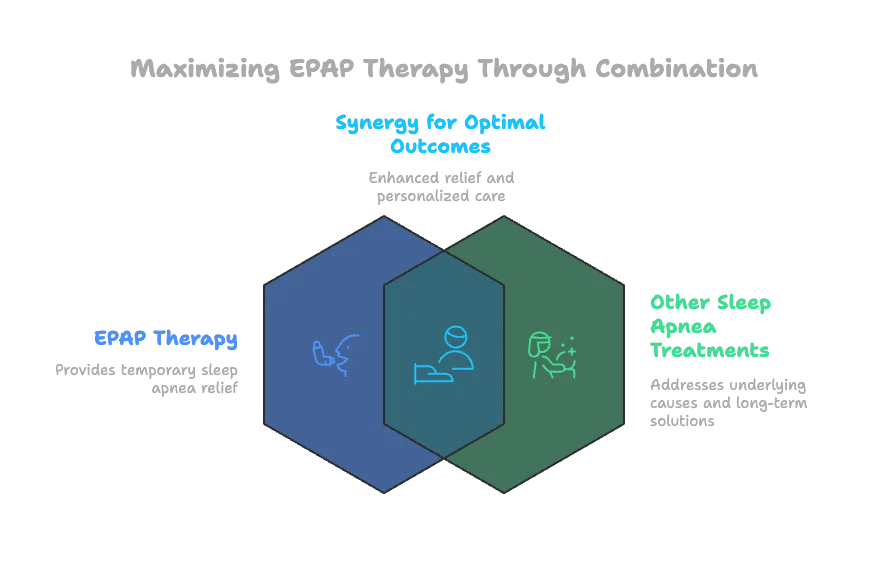
Combination therapy pairs EPAP with oral appliances, positional therapy, or lifestyle changes for people needing more help. Backup therapy uses EPAP when primary treatments aren’t practical. Some people use CPAP at home but switch to EPAP when traveling.
Transitional therapy helps people working toward other treatments. EPAP provides temporary improvement while waiting for oral appliance fabrication. Regular follow-ups ensure continued effectiveness.
Effective Ways to Combine EPAP with Other Treatments
Getting the most from EPAP often means using it alongside other therapies.
Common combinations include EPAP plus weight loss, EPAP with positional therapy, EPAP alongside oral appliances, EPAP as CPAP backup, and EPAP with allergy treatment.
Transitional therapy provides immediate relief while waiting for other treatments. EPAP gives temporary improvement during oral appliance fabrication.
Regular follow-ups with sleep specialists ensure effectiveness. Healthcare providers schedule checkups to assess symptom improvement and match treatment to your needs.
Success depends on finding the right combination for your unique situation.
Clinical Integration and Professional Support
Healthcare providers incorporate EPAP into comprehensive treatment programs. This gives patients more options and better outcomes.
Professional evaluation determines if EPAP is right for your case. Assessment looks at sleep study results, nasal anatomy, treatment history, and preferences. Proper fitting ensures devices work effectively and comfortably.
Progress monitoring tracks EPAP effectiveness through follow-up appointments and symptom assessment. Troubleshooting support helps address problems during EPAP use. Common issues often get resolved with professional guidance.
Coordination with sleep specialists ensures comprehensive care when EPAP is used alongside other treatments. This team approach maximizes benefits of all treatment modalities.
Limitations and Considerations
EPAP has limitations you need to understand. No treatment works perfectly for every patient.
Severity limitations mean EPAP typically works best for mild to moderate sleep apnea. People with severe apnea usually need more powerful treatments like CPAP. Nasal dependency makes EPAP unsuitable for people with chronic congestion, severe allergies, or structural problems.
Variable effectiveness means EPAP doesn’t work equally well for all patients. Ongoing costs include regular device replacement. Limited insurance coverage means EPAP might not be covered by all plans.
Maximizing EPAP Success
Getting best results from EPAP requires proper use, realistic expectations, and ongoing communication with your healthcare team.
Consistent use is essential for effectiveness. Use devices every night to maintain benefits and prevent symptom recurrence. Proper placement ensures devices work correctly all night long.
Lifestyle support enhances EPAP effectiveness when combined with healthy sleep habits, weight management, and avoiding alcohol before bedtime.
Regular evaluation with your sleep specialist ensures continued success. Checkups identify when adjustments or alternative approaches might be needed. Ongoing professional support maximizes long-term benefits.
Your EPAP Treatment Journey
EPAP therapy represents an important advancement in sleep apnea treatment. It offers a simple, portable alternative for people struggling with traditional CPAP.
This article provides educational information about EPAP therapy to help you understand your treatment options. Dr. Elaine Wu at ReNEW Dental, trained at Boston University and the Kois Center, specializes in oral appliance therapy for sleep apnea. While EPAP is not offered at ReNEW Dental, Dr. Wu provides comprehensive evaluation and expert treatment with custom oral appliances.
If you’re exploring sleep apnea treatment options, including oral appliances that offer similar convenience and comfort benefits to EPAP, schedule your consultation with Dr. Wu at ReNEW Dental today. She’ll help you find the right solution for your specific needs.
ReNEW Dental
978-451-1500
1201 Main St. Tewksbury, MA 01876
Schedule your consultation today!
Frequently Asked Questions
How comfortable is EPAP compared to CPAP for sleep apnea treatment?
EPAP devices are way more comfortable than CPAP. No mask on your face. No forced air pressure. No straps to adjust. Small nasal devices allow natural breathing in with gentle back-pressure only when you exhale. American Academy of Sleep Medicine shows patient comfort significantly impacts compliance. Sleep Foundation research confirms EPAP users report higher satisfaction rates
Is EPAP effective for all sleep apnea severities?
EPAP works best for mild to moderate obstructive sleep apnea with AHI scores 5 to 30. Not effective for severe or central sleep apnea. Sleep specialists evaluate your sleep study results, nasal anatomy, and other factors to determine appropriate treatment. National Heart, Lung, and Blood Institute emphasizes matching treatment intensity to severity.
Can EPAP fit into my daily routine easily?
EPAP devices are designed for maximum convenience. No electricity, no noise, minimal cleaning, small enough to carry anywhere. Perfect for travelers and active lifestyles. Mayo Clinic studies show significantly higher compliance rates with portable devices. American Thoracic Society research confirms travel-friendly treatments improve adherence.
Related Articles
Common Sleep Apnea Treatments – Positional Therapy – Oral Appliance Therapy – Signs of Sleep Apnea – Sleep Apnea Comorbidities – Sleep Apnea Testing